Last updated:
The basic rules for all crypto assets, from the holding period to the exemption threshold, can be found in our guide Crypto Tax Advisor.
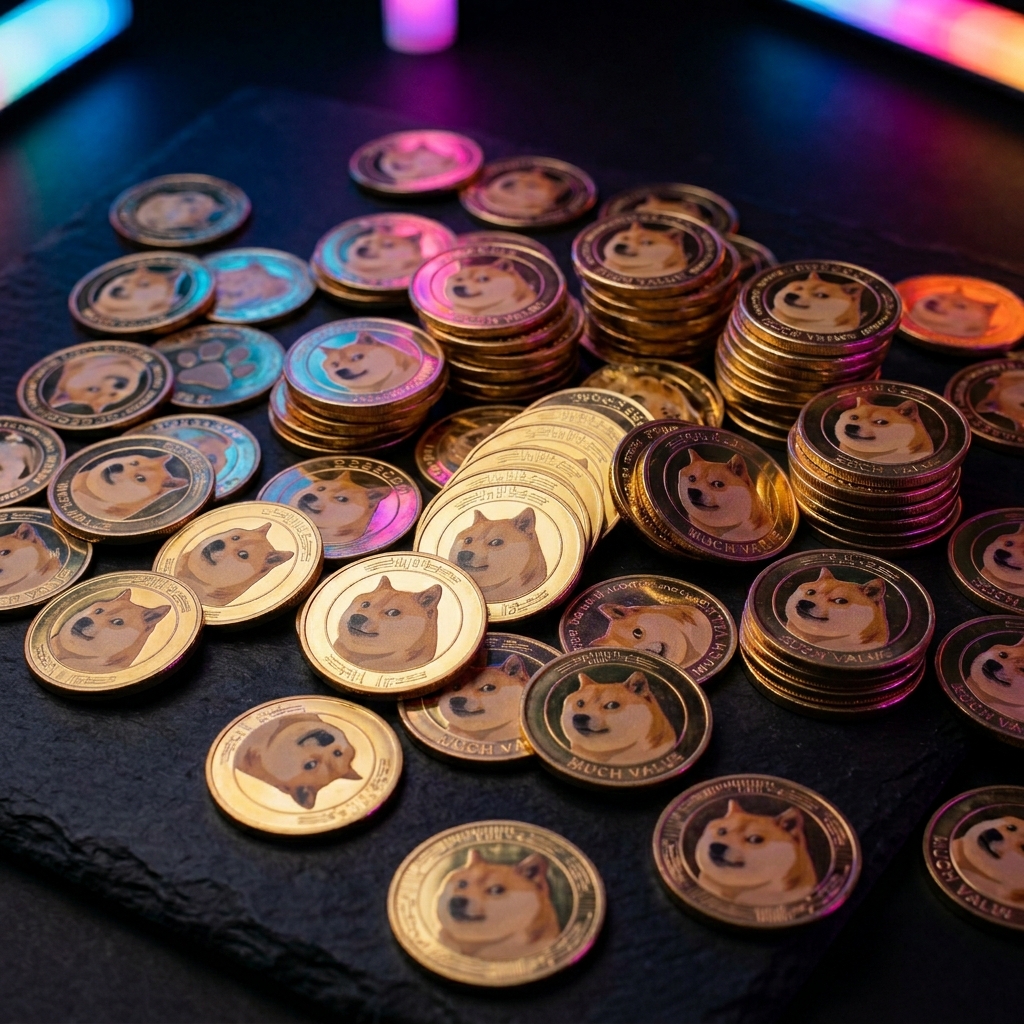
Memecoins such as Dogecoin, Trump Coin, Shiba Inu or newer representatives such as Bonk and Floki Inu have long since ceased to be merely amusing internet trends. They have developed into a popular asset class that frequently gains value through viral memes and community support. But behind the humorous concepts lies tax reality: gains from memecoins are not always tax-free, and investors should know the tax rules in Germany precisely.
What are memecoins?
Memecoins are cryptocurrencies based on viral content, humour or trends. They often have no technological use but attract investors through clever marketing and viral distribution. The most popular memecoins are often based on particular themes, such as:
Memecoins and the Solana blockchain
In the current market situation, many new memecoins are launched on the Solana blockchain. Solana is known for its fast transaction processing and low fees, which makes it particularly attractive for developers and traders. Coins such as Bonk and other Solana-based memecoins have become popular quickly.
You can trade memecoins on centralised exchanges (CEX) such as Binance, KuCoin, Coinbase or Kraken. Alternatively there are decentralised exchanges (DEX) such as Jupiter, PancakeSwap or Uniswap, which enable direct trading without intermediaries.
Important: For tax purposes it makes no difference whether the exchange takes place via a centralised or a decentralised exchange; both types of transaction are taxable.
Tax treatment of memecoins in Germany
Like all cryptocurrencies, memecoins are subject to income tax under Section 23 EStG (private disposal transactions). The decisive factors are holding periods, gains, losses and correct documentation.
Documentation for the taxation of memecoins
Correct documentation of all transactions is the key to a correct tax return. This applies in particular if you trade via decentralised wallets such as Phantom or MetaMask. Unlike with centralised exchanges, here you are responsible yourself for the complete recording of all purchases, sales and exchanges.
Recommendation:
Exemption threshold for private disposal transactions
In Germany an exemption threshold of 1,000 EUR per calendar year applies to gains from private disposal transactions. It is important to note that this is an exemption threshold and not an allowance. This means:
– If your gains remain below 1,000 EUR in total (for example 999.99 EUR), they are tax-free.
– As soon as your gains exceed the 1,000 EUR threshold in total, the entire gain becomes taxable.
Example 1: gains below the exemption threshold
– Gain from trading Dogecoin: 800 EUR.
– Gain from trading Shiba Inu: 150 EUR.
– Total gain: 950 EUR.
– Result: Tax-free, because the total gain is below the exemption threshold.
Example 2: gains above the exemption threshold
– Gain from trading Dogecoin: 900 EUR.
– Gain from trading Floki Inu: 200 EUR.
– Total gain: 1,100 EUR.
– Result: The entire gain of 1,100 EUR becomes taxable because the exemption threshold of 1,000 EUR was exceeded.
Important note: check all private disposal transactions
The exemption threshold of 1,000 EUR applies to all private disposal transactions within a calendar year, not only to cryptocurrencies. If in the same year you also carried out other transactions such as the disposal of gold, silver, other precious metals or real estate, those gains can likewise be counted towards the exemption threshold.
Tip: Make absolutely sure that you check all private disposal transactions of the calendar year in order to avoid exceeding the exemption threshold unknowingly. Gains from these transactions are added together, and if the threshold of 1,000 EUR is exceeded, the entire amount becomes taxable.
Exchanging memecoins
Anyone dealing with the taxation of memecoins in Germany should observe holding periods. Exchanging one memecoin for another cryptocurrency is also regarded as a disposal for tax purposes. Gains from such transactions realised within one year are likewise taxable.
Tip: Where possible, exchange memecoins for stablecoins such as USDC rather than for other memecoins. The reason: stablecoins are pegged to the US dollar and therefore retain a stable value. This considerably simplifies documentation, because the exact value at the time of the exchange is unambiguous. With highly volatile coins such as other memecoins, by contrast, it can be difficult to trace the exact value of the exchange.
Conclusion: do not underestimate the tax liability of memecoins
Memecoins such as Dogecoin, Trump Coin or Bonk offer great opportunities but are also relevant for tax. Gains within the holding period are subject to income tax, regardless of whether the trade took place on a CEX or a DEX. With the right strategy, for example exchanging into stablecoins, and complete documentation, you can fulfil your tax obligations efficiently and benefit from the potential of these humorous cryptocurrencies.
Do you need support with the tax treatment of your memecoins?
My crypto tax advisory service helps you with documentation, tax returns and strategic planning. Contact me now for a no-obligation consultation.
Contact me for individual advice!
More articles on this topic
For tricky cases such as memecoins, airdrops or DeFi, a specialised crypto tax advisor is worthwhile. We take care of preparation, tax classification and filing.
Frequently Asked Questions on memecoins and taxes
How are memecoins taxed in Germany?
Exactly like Bitcoin or Ethereum: as a private disposal transaction under Section 23 EStG. Gains within the one-year holding period are taxable as soon as all private disposal gains for the year exceed the exemption threshold of 1,000 euros. After a holding period of more than one year, gains are tax-free.
Does the holding period also apply to extremely volatile coins?
Yes, the period makes no exception for volatility. With memecoins in particular, however, it is rarely reached because most positions are turned over within days or weeks. In that case every gain is taxable and every loss is at least available for offsetting.
What about coins that have become worthless?
A total loss can be usable for tax purposes, for example by selling the worthless position. The loss then reduces other private disposal gains. What matters is documenting the acquisition and the sale, even if the proceeds are only symbolic.
Do I also have to document many small memecoin trades?
Yes, every single transaction. With hundreds of small trades via DEXes in particular, a documentation problem quickly arises that can hardly be repaired years later. Exchanges will report automatically to the tax authorities in future, and your own history should stand up to that.