Last updated:
The complete foundations on the holding period, staking and all other crypto tax topics are set out in our guide Crypto Tax Advisor.
Understanding crypto taxes: how to optimise your return
Have you ever wondered how taxes affect your crypto returns? With investment income, around 25% usually goes to the tax office. But what if you did not have to pay any tax at all on your crypto investments? Sounds too good to be true? With the right strategies it is possible, and you do not even have to emigrate for it.
Here are the 10 most important points you should observe as a private investor in crypto investments:
1. The speculation period in crypto trading
Cryptocurrencies fall under private disposal transactions. If you sell cryptocurrencies within one year of purchase, the gains realised are fully taxable. However, if you hold your cryptocurrencies for longer than one year, the gains are tax-free. That is a great way to maximise your return.
2. Tax liability when exchanging crypto
Did you know that not only the sale but also the exchange of cryptocurrencies is taxable? If you exchange coins within one year, this is treated as a sale for tax purposes.
3. Building reserves
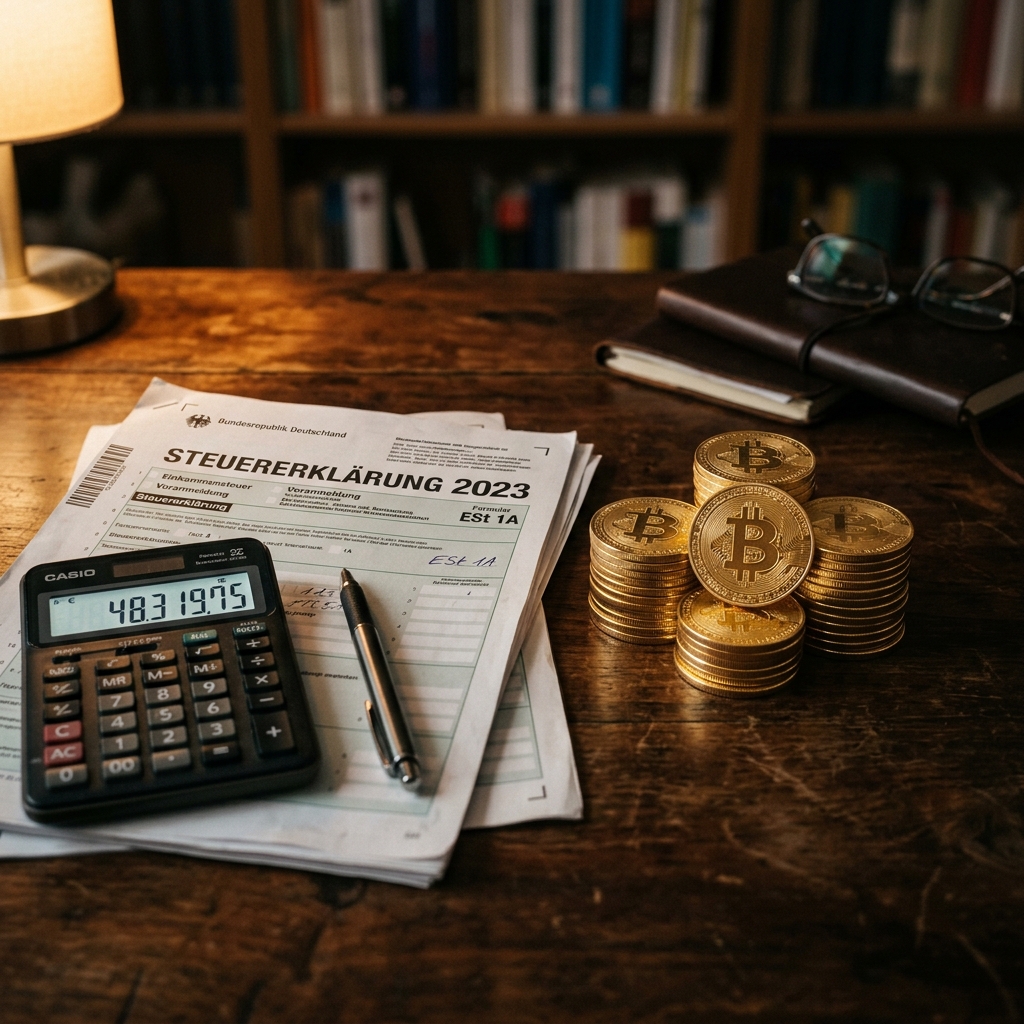
A common mistake is not building reserves for tax payments. Set aside around 30% of every gain in order to avoid nasty surprises with your tax return, particularly if you trade short-term or engage in staking.
4. Offsetting losses
Losses can reduce your tax burden, but only if they are realised within the speculation period. Losses that go beyond one year cannot be offset. So keep a close eye on your investments.
5. Tax treatment of staking and lending
Staking and lending count as other income (Section 22 no. 3 EStG) and are taxed at your personal tax rate. Caution: active staking can be classified as a commercial activity and bring additional tax obligations with it.
6. Stay informed
The tax rules for cryptocurrencies are constantly changing. Keep yourself regularly informed about current developments so that you are not caught out by new provisions.
7. De minimis thresholds
Exemption thresholds apply to smaller gains: gains from private disposal transactions below 600 euros, as well as current income (for example from staking or lending) below 256 euros, are tax-free.
8. Trading crypto-related securities
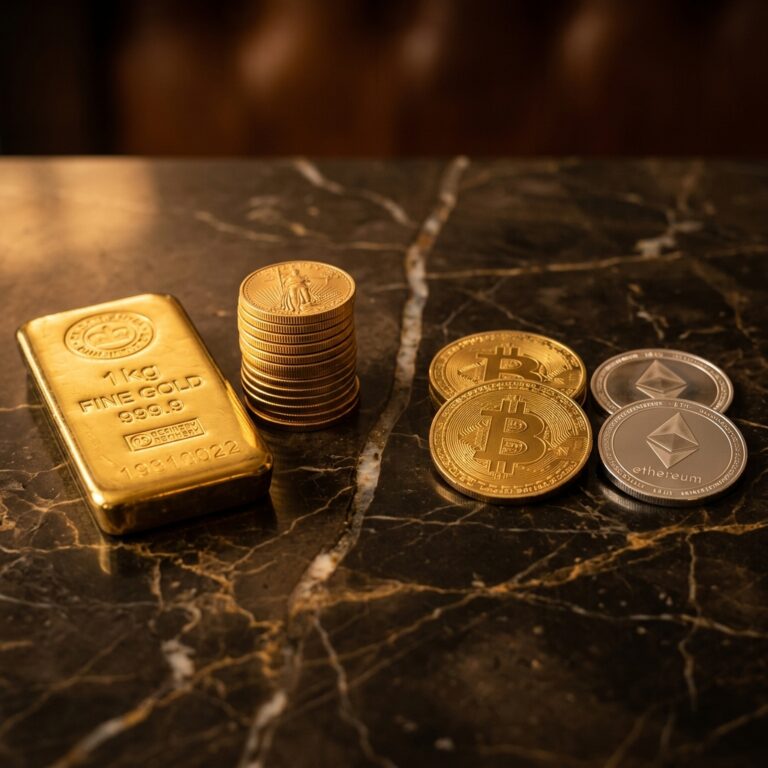
An interesting option is buying securities such as ETPs, ETNs or ETCs that represent cryptocurrencies on the stock exchange. These are debt securities that are not based directly on the blockchain but function as classic exchange-traded products. What is decisive for the tax exemption after one year of holding is whether these securities are physically backed by the cryptocurrency and whether delivery of the actual cryptocurrency is possible for you. You will find this important information in the factsheet of the respective security. This principle is comparable to that of gold investments, where physical ownership in the form of bars, coins or ETCs likewise becomes tax-free after one year of holding.
9. Using tracking tools
Managing your crypto transactions can become complex. Tools such as CoinTracking help you organise your portfolio and produce tax reports. I regularly recommend this tool to my clients.
10. Seeking professional help
Tax law for cryptocurrencies is complex and changes continuously. A tax expert can help you optimise your strategy and get the best out of your crypto investments.
Contact me for advice
Are you ready to clarify your tax questions in the crypto field? As a tax advisor with a deep understanding of the crypto world, I am glad to support you. With my personal experience in trading and in advising numerous clients, I know the typical challenges of tracking transactions.
Tailored solutions for your crypto taxes:
- Advice on the best tax strategy
- Digitalisation of your bookkeeping
- Representation before the tax office
Learning to use CoinTracking effectively:
In my course CoinTracking without chaos I show you how to manage your crypto transactions without stress and efficiently.
Conclusion
Crypto taxes can have a large influence on your return. With the right strategies and professional support you can minimise your tax burden and get more out of your investments. Contact me for individual advice!
More articles on this topic
Frequently Asked Questions on crypto taxes
When are crypto gains tax-free in Germany?
Gains from the private sale of cryptocurrencies are tax-free if more than one year lies between purchase and sale. The period runs to the day. Within one year, the gain only remains tax-free if all private disposal gains for the year together stay below the exemption threshold of 1,000 euros.
Is the 1,000 euro exemption threshold an allowance?
No, and that is exactly the most common confusion. An allowance would always be deducted. The exemption threshold works differently: if your total private disposal gains exceed 1,000 euros by even one euro, the entire gain is taxable, not just the excess portion.
Does a coin-to-coin exchange count as a sale?
Yes. If you exchange Ethereum for Solana, for example, for tax purposes there is a sale of Ethereum and a purchase of Solana. The gain from the Ethereum sale is taxable depending on the holding period, and a new one-year holding period starts to run for Solana.
Which method applies to the order of sales?
In Germany the FIFO method applies: first in, first out. The coins acquired first are deemed to be sold first, and this is assessed per wallet. The BMF circular of 06.03.2025 confirms this wallet-based approach. Clean documentation per wallet is therefore decisive.
Do staking rewards have to be taxed?
Yes. Staking rewards are other income under Section 22 no. 3 EStG and are taxed at the market value at the time of receipt. A separate exemption threshold of 256 euros per year applies to them. The holding period of the staked coins is not extended as a result.